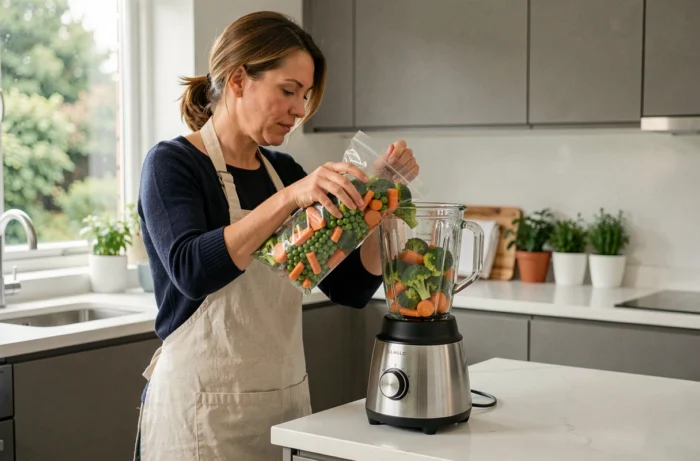
A bag of frozen vegetables, a heated blender, a bit of liquid: the soup can be ready in under half an hour. But between the block of frozen vegetables and the creamy velouté, a few steps make all the difference. Adjusting the amount of liquid, following the order of ingredient addition, and managing the starting temperature avoids unpleasant surprises, from overflow to overly watery soup.
Temperature and liquid: the two settings that change everything
Have you ever poured frozen vegetables directly into the bowl and started the program? The ice block lowers the liquid’s temperature, and the heated blender then takes much longer to reach the necessary heat. Some devices even struggle to complete the cycle.
The solution is simple. Always add warm or hot liquid to the bowl before placing the frozen vegetables in. Hot tap water or warmed broth is sufficient. This way, the blender reaches its cooking temperature much faster, and the vegetables begin to thaw upon contact with the liquid.
In terms of volume, frozen vegetables release water as they thaw. If you add as much broth as you would with fresh vegetables, your soup will be too diluted. Reduce the amount of liquid by about a quarter compared to your usual amount with fresh. You can always add more after blending if the texture is too thick.
To use frozen vegetables with a heated blender without risking overloading the device, do not exceed the maximum fill line. A compact block of frozen vegetables takes up more space than you might think once the liquid is added.
Frozen vegetables in a heated blender: should you thaw before cooking?
The short answer: no, not necessarily. Anses considers cooking a valid thawing method for vegetables. You can therefore place them directly into the bowl without a prior step in the refrigerator.
But “not necessary” does not mean “never useful.” Separating the vegetables before putting them in the bowl helps ensure even cooking. A compact block of frozen broccoli, for example, keeps its center frozen while the edges are already cooked. Two practical tips:
- Run the bag under cold water for one to two minutes to separate the pieces without actually thawing them
- If you have time, spread the portion on a plate in the refrigerator an hour beforehand: the pieces will separate without breaking the cold chain
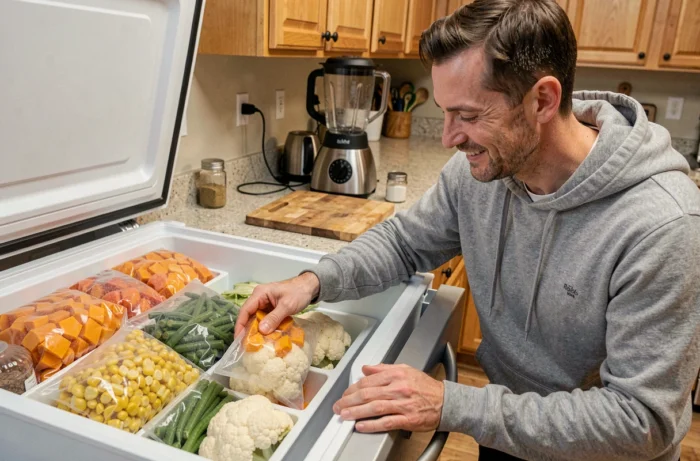
- Only take the necessary amount and immediately reseal the bag, as thawed products should never be refrozen
This last rule is often overlooked. If the entire bag has started to soften, use it all or store the rest in the refrigerator to consume within the following hours.
Choosing frozen vegetables and cooking order for a successful soup
Not all frozen vegetables behave the same way in a heated blender. Squashes, carrots, and potatoes require a longer cooking time than zucchini, spinach, or peas. Mixing vegetables with very different cooking times results in an uneven outcome: some pieces remain firm while others disintegrate.
Group vegetables by similar density in the same recipe. A carrot-sweet potato velouté works well because both ingredients cook at roughly the same pace. A spinach-carrot mix, on the other hand, requires a trick: add the carrots first and cook for a few minutes before incorporating the spinach.
Commercial frozen vegetable mixes (like “soup vegetables”) are calibrated to cook together. They make a good starting point. However, high-water-content vegetables like zucchini dilute the result. For a thick velouté, pair them with a denser vegetable or add a potato.
A note on nutrients
Cooking in a heated blender has a nutritional advantage that is often underestimated. Unlike boiling in a pot where the broth is discarded, the cooking liquid remains in the bowl and ends up in the final soup. The vitamins and minerals that migrate into the water during cooking are therefore not lost.
To best preserve these nutrients, avoid the longest programs if your vegetables do not need them. A standard “velouté” program is suitable in most cases.
Heated blender soup recipes: three combinations that work with frozen vegetables
Rather than listing complete recipes, here are three tested combinations that yield good results in texture and flavor with frozen vegetables:
- Frozen broccoli, a fresh potato cut into small cubes, warm chicken broth, and a pinch of nutmeg. The potato adds a binding quality that broccoli alone does not provide
- Frozen soup vegetable mix, a drizzle of olive oil added after cooking, and a few fresh basil leaves. The oil and basil compensate for the loss of aromas due to freezing
- Frozen carrots, red lentils (dry, added directly to the bowl), cumin, and hot broth. Red lentils cook quickly and naturally thicken the velouté
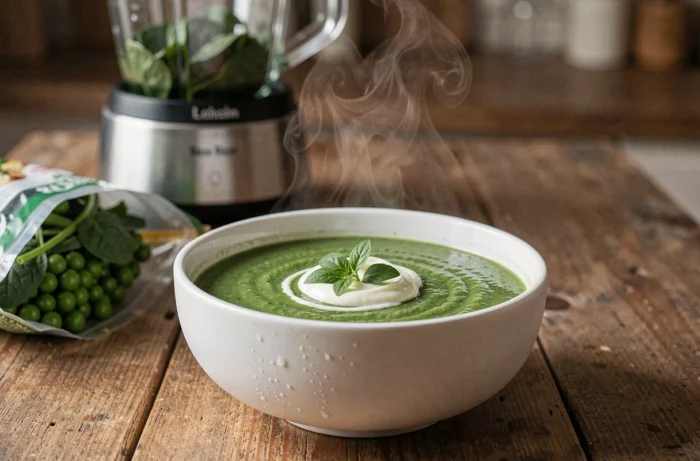
Adding a fat or fresh herb after cooking significantly enhances soups made with frozen ingredients. Cream, olive oil, fresh herbs, or a splash of lemon juice transform the result.
The heated blender excels at making blended soups and veloutés. If you are looking for a soup with identifiable and crunchy vegetable pieces, a separate gentle steaming process is more suitable. Each device has its strengths: the heated blender simplifies the preparation of smooth soups, and this is precisely where it excels with frozen vegetables.