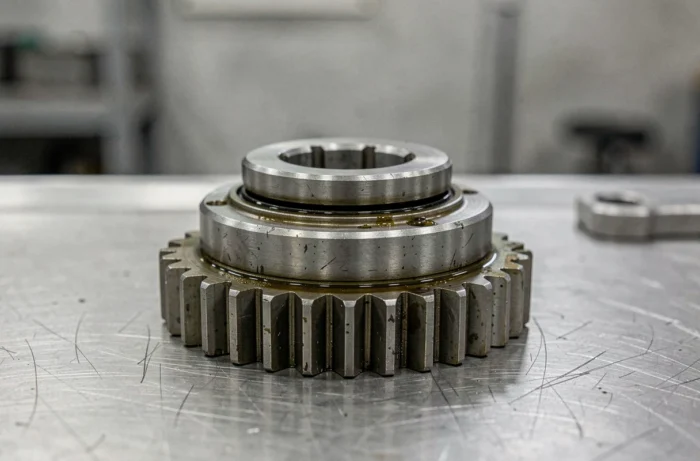
When you shift gears in a traditional car, a mechanism called a synchronizer equalizes the rotation of the parts before they engage. The dog gearbox works differently: it directly interlocks teeth without this smoothing phase. This simple principle changes a lot regarding the efficiency, comfort, and durability of a vehicle.
Dog vs. Synchronizer: What Happens Mechanically in the Gearbox
Imagine two gears placed side by side on a shaft. In a synchronized gearbox, a brass ring rubs against the pinion to adjust its rotational speed before engagement. This friction consumes energy and wears the parts over time.
In a dog gearbox, this intermediate cushion does not exist. Teeth shaped like notches (the dogs) directly interlock. The gear shift is more abrupt, but the energy loss between the engine and the wheels is minimal.
Renault indicates an efficiency of 98.5% per engagement for its E-Tech dog gearbox. This figure explains why motorsport, from Formula 1 to rallying, has used this type of transmission for decades: every fraction of power counts. The explanations on the dog gearbox from Niraj Web detail this efficiency difference compared to synchronized gearboxes.
The absence of synchronizers also makes the gearbox more compact and lighter. Fewer moving parts mean less mass carried, a direct advantage for fuel or electricity consumption.
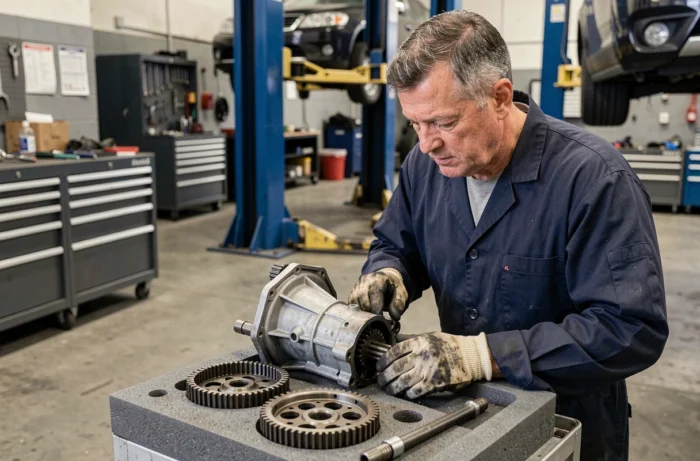
Dog Gearbox and E-Tech Hybrid: Why Renault Made This Choice
The dog gearbox is not new at Renault. Louis Renault used it on the Type A car in 1898 to climb the Rue Lepic in Paris. But its recent return in the E-Tech range is not a nostalgic tribute.
You may wonder why a mainstream manufacturer is adopting a technology known for being uncomfortable? The answer lies in hybridization. Electric motors replace mechanical synchronizers. Specifically, when the gearbox needs to shift, an electric motor adjusts the rotational speed of the shaft so that the dogs interlock smoothly. The electronic control manages the coordination between the internal combustion engine and two electric motors.
This system creates a series-parallel hybrid architecture. Depending on driving conditions, the vehicle can run in all-electric mode, internal combustion mode only, or combine both sources. The dog gearbox, thanks to its compactness, leaves room to integrate the electric motors without adding weight to the powertrain.
The Case of the Rafale 4×4
On the Renault Rafale E-Tech 300 hp, an additional electric motor is mounted on the rear axle. The all-wheel drive operates without a mechanical shaft connecting the front to the rear. The dog gearbox manages the front axle while the electric motor drives the rear, simplifying the architecture and reducing weight.
This setup shows that the dog gearbox is not an isolated component. It is part of a coordinated system where each component has a specific role in managing torque and gears.
Concrete Limitations of the Dog Gearbox in Daily Use
The mechanical abruptness of the dogs remains their main drawback. Without a synchronizer or electric assistance, the gear shift produces a noticeable jolt. In competition, the driver can accommodate this. In a family car, it is unacceptable.
Driving comfort depends entirely on electronic control. If the software miscalculates the rotational speed, the teeth of the dogs face each other instead of interlocking. The result: a jolt, sometimes an unpleasant noise. Some E-Tech vehicle owners have reported this type of behavior, particularly in the early production series.
Renault has corrected some of these defects through software reprogramming and recall campaigns. But the principle remains the same: the reliability of a modern dog gearbox relies as much on software as on mechanics.
Here are the points of caution to keep in mind:
- Jolts during gear shifts can occur at low speeds when the system hesitates between electric and thermal modes
- Software updates are sometimes necessary to correct the behavior of the gearbox, which requires visits to the dealership
- Driving uphill puts significant strain on the coordination between electric motors and the dog gearbox, which can cause unusual reactions in some models
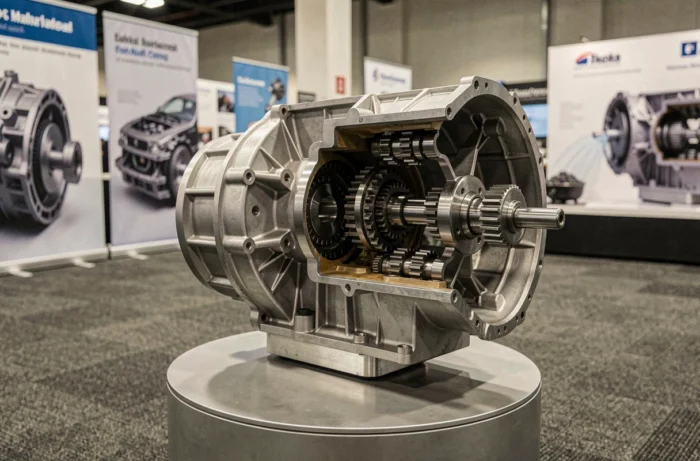
Dog Gearbox or Traditional Automatic Gearbox: Choosing Criteria for a Buyer
Conventional automatic gearboxes use epicyclic gears and a hydraulic torque converter. They naturally absorb variations in speed, making them smooth to use. However, their efficiency is lower than that of a dog gearbox.
The choice depends on your priority. If energy efficiency matters more than absolute comfort, the dog gearbox integrated into a hybrid system has a measurable advantage. If you mainly drive in the city with frequent stops, the smoothness of a traditional automatic gearbox or a CVT may be more suitable.
- The hybrid dog gearbox excels in mixed trips (city and highway) where the alternation between electric and thermal modes is frequent
- An automatic gearbox with a converter remains more predictable in slow maneuvers and traffic jams
- The maintenance cost of an E-Tech dog gearbox depends heavily on the generation of the onboard software and the history of updates
Before buying a vehicle equipped with a dog gearbox, ensure that all manufacturer reprogramming has been applied. A complete update history is as revealing as the mileage to assess the actual condition of the transmission.
The dog gearbox is neither a gadget nor a miracle solution. It is a coherent technical choice when integrated into a well-calibrated hybrid architecture, and a compromise to evaluate based on your driving habits.